


Will Solana Overtake Ethereum? A 2026 Market Perspective
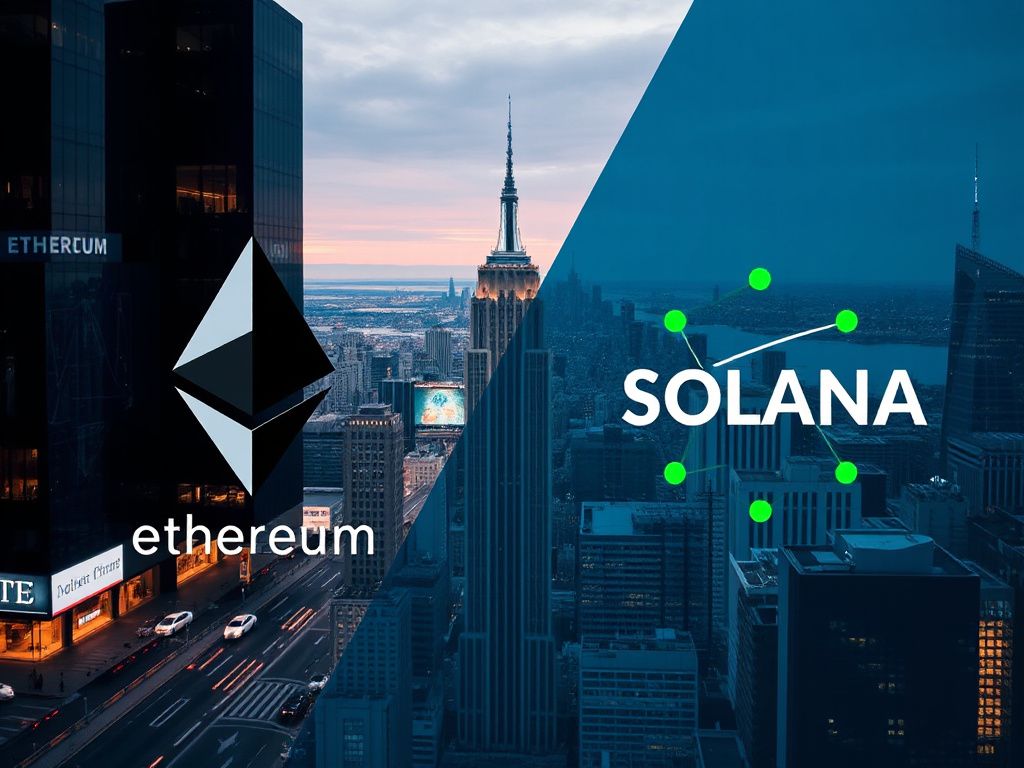
As of mid‑2026 the cryptocurrency landscape remains dominated by Ethereum, whose market capitalization hovers around $186.3 billion, while Solana lags far behind at roughly $46 billion. Closing this $196 billion gap would require Solana to grow more than fourfold – a 417 % increase – in a market that is already saturated with competing layer‑1 protocols and experiencing a rotation of liquidity toward stablecoins. Institutional investors continue to pour capital into Ethereum, drawn by its mature ecosystem, robust security guarantees, and the upcoming “Glamsterdam” upgrade, which promises to boost transaction throughput to 10,000 TPS and cut gas fees by up to 78 %. These enhancements are designed to address the scalability concerns that have historically limited Ethereum’s broader adoption, reinforcing its position as the primary platform for decentralized finance (DeFi), non‑fungible tokens (NFTs), and enterprise‑grade smart contracts.
Solana, despite its reputation for high‑speed, low‑cost transactions, faces structural challenges that make a rapid market‑cap surge unlikely. The network’s reliance on a smaller validator set raises questions about long‑term decentralization and resilience, especially as regulatory scrutiny intensifies worldwide. Moreover, the recent surge in stablecoin demand – highlighted by Tether (USDT) overtaking Ethereum to become the second‑largest cryptocurrency by market cap at $187.05 billion – underscores a broader shift in investor behavior toward assets perceived as safer during periods of heightened volatility. This liquidity rotation has not only compressed Ethereum’s market cap but also amplified the competitive pressure on alternative blockchains, which must now demonstrate not just speed but also robust security and regulatory compliance to attract institutional funding.
In practical terms, Solana’s path to eclipsing Ethereum by 2028 would require a confluence of factors: a sustained inflow of institutional capital, successful mitigation of decentralization concerns, and a compelling value proposition that differentiates it from both Ethereum’s evolving roadmap and the growing dominance of stablecoins like USDT. Until these conditions materialize, Ethereum’s entrenched network effects, ongoing upgrades, and continued appeal to large‑scale investors suggest it will retain its lead. For market participants, the key takeaway is to monitor not only raw market‑cap figures but also the underlying drivers – such as upgrade schedules, validator diversity, and stablecoin dynamics – that shape the long‑term hierarchy of blockchain platforms.